Work Hope Channel Online Bible school
The first interactive Bible school in the Adventist church
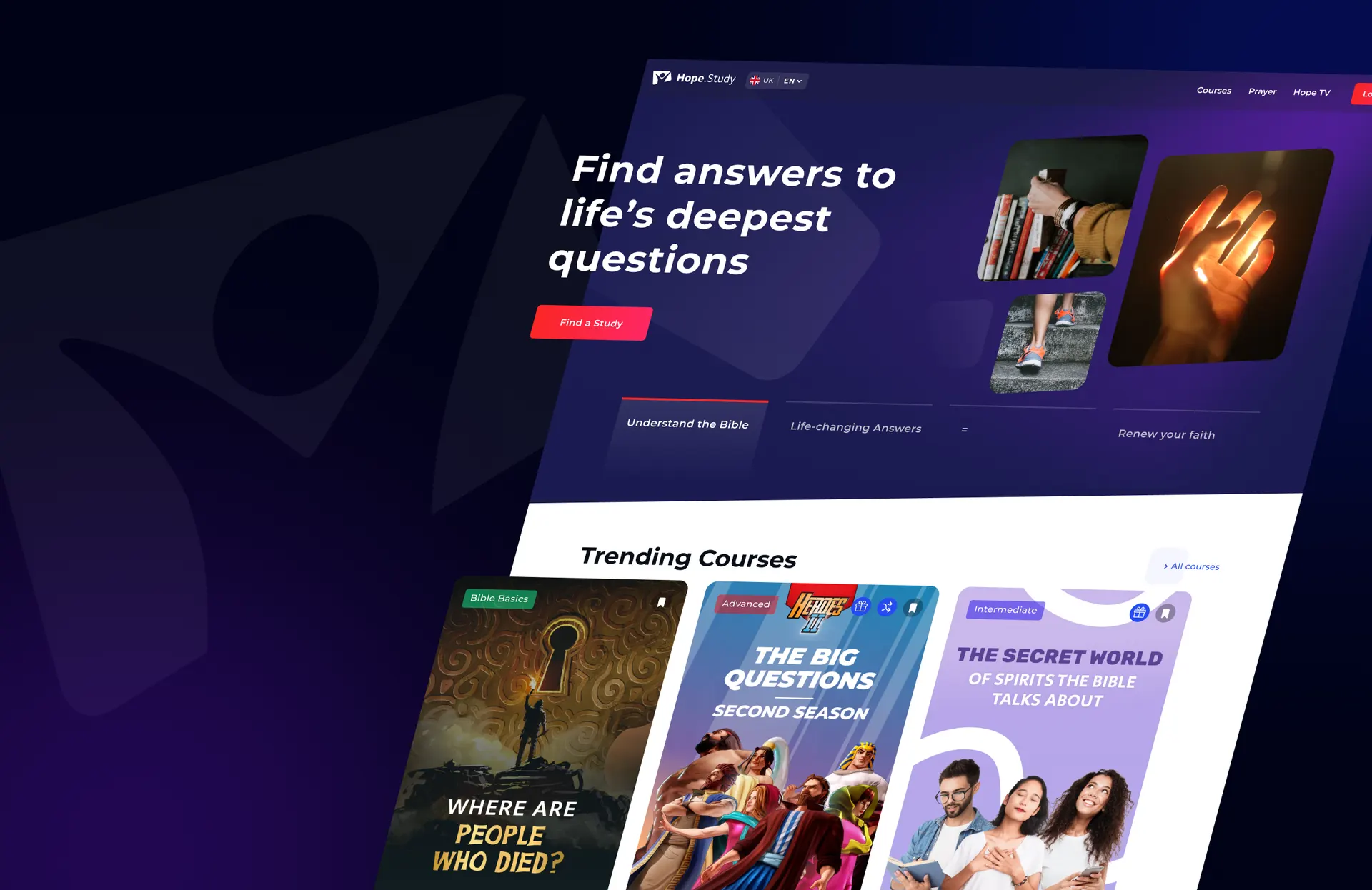
Hope.study turned the Bible course into something that asks questions back: quizzes, branching, a bot, webinars and an editor the team runs themselves. Half a million people have come through it, and this is an honest account of what that converted.
01What they came with
An online Bible course, almost everywhere, is a video and a form. You watch, you fill something in, and nothing you do changes what happens next. The people who finish are the people who were going to finish anyway.
Hope Channel wanted the opposite: a school that reacts. Something a person could answer, be answered by, and be followed up on.
02What was getting in the way
Online learning converts badly, and everybody in it knows the figure and quotes a better one. Completion rates for free online courses are low by nature, and a Bible school is competing for the same attention as everything else on the same phone.
The second problem is that marketing and teaching are usually two departments. On a course, they are one job: what brings a person in decides who arrives, and who arrives decides what the first lesson has to do. Run them separately and the funnel fills with people the course was not written for.
The third is the one no platform solves. Technology ends where the person begins. Somebody has to notice that a student stopped on lesson four, and care enough to write. Mentorship is the hardest part of this work and the least amenable to software.
03What we built
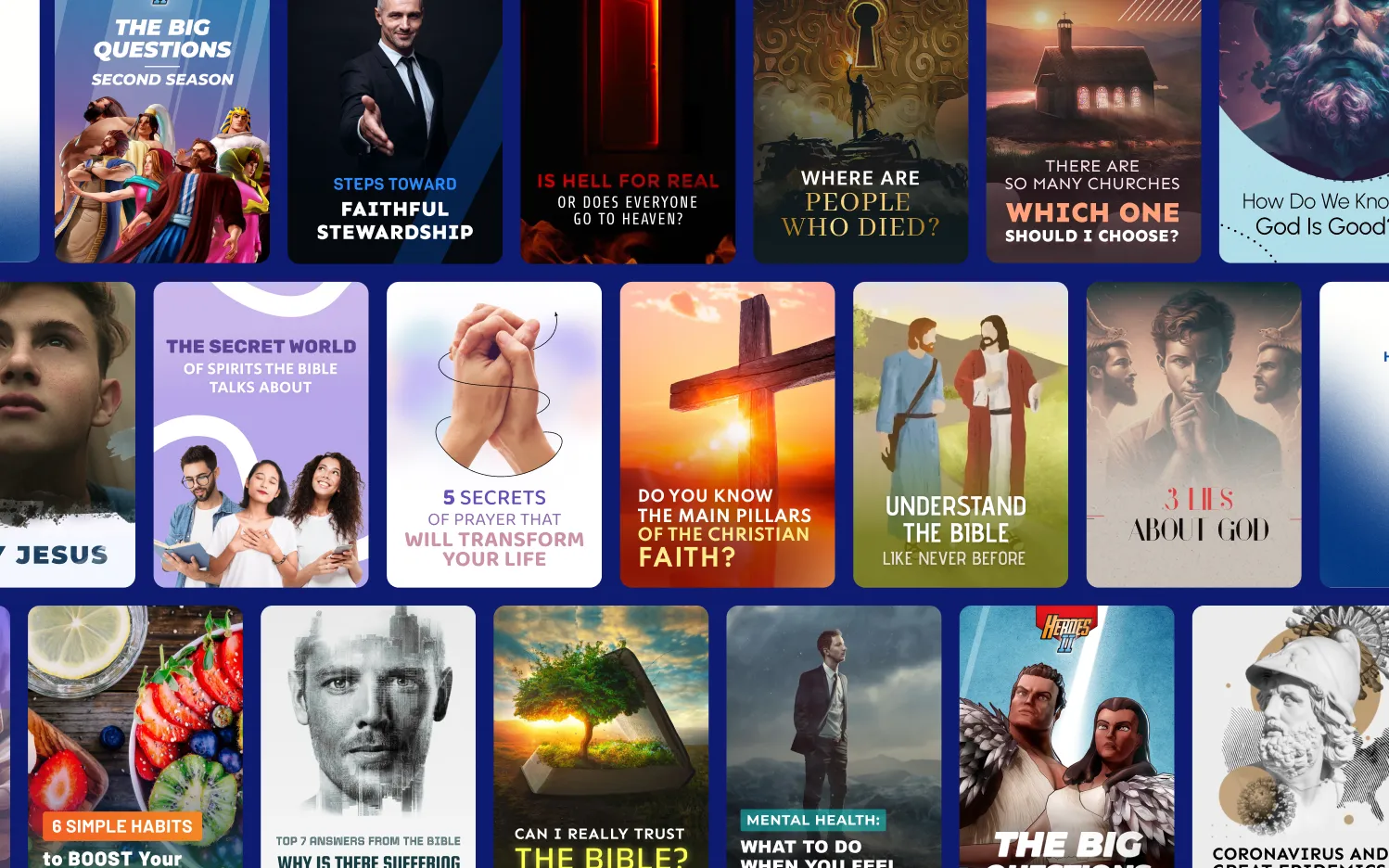
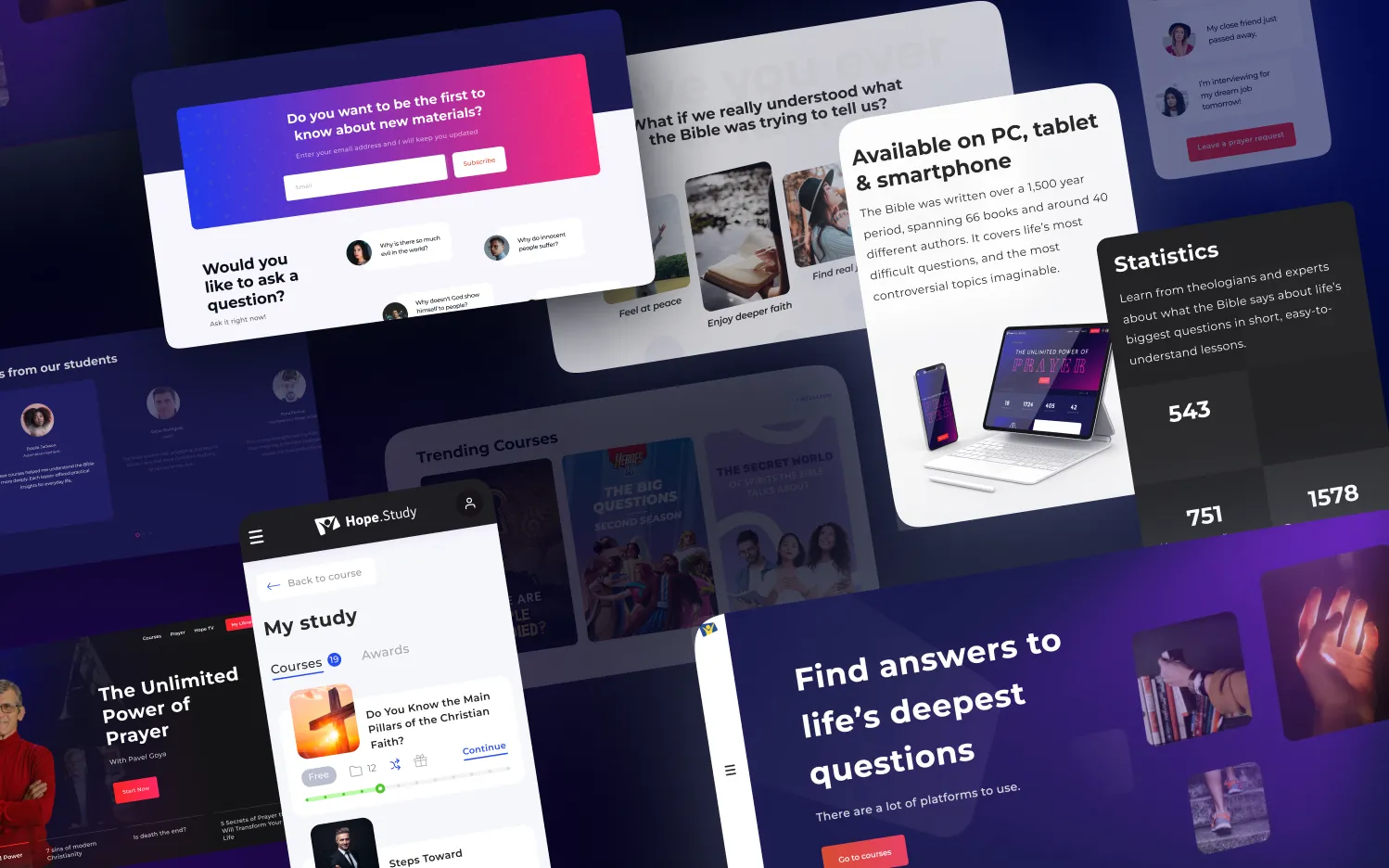
A learning platform where the lesson can ask back. Quizzes and polls, branching that sends two students down different paths from the same answer, a bot that carries the conversation between lessons, tests, webinars and notifications that arrive because of what somebody did rather than on a schedule.
Analytics underneath all of it, which is the part that makes the rest arguable: which lesson loses people, which question splits a cohort, what a campaign actually delivered once the students arrived.
A course editor the team uses without us. A school that needs a developer to publish a lesson is a school that stops publishing.
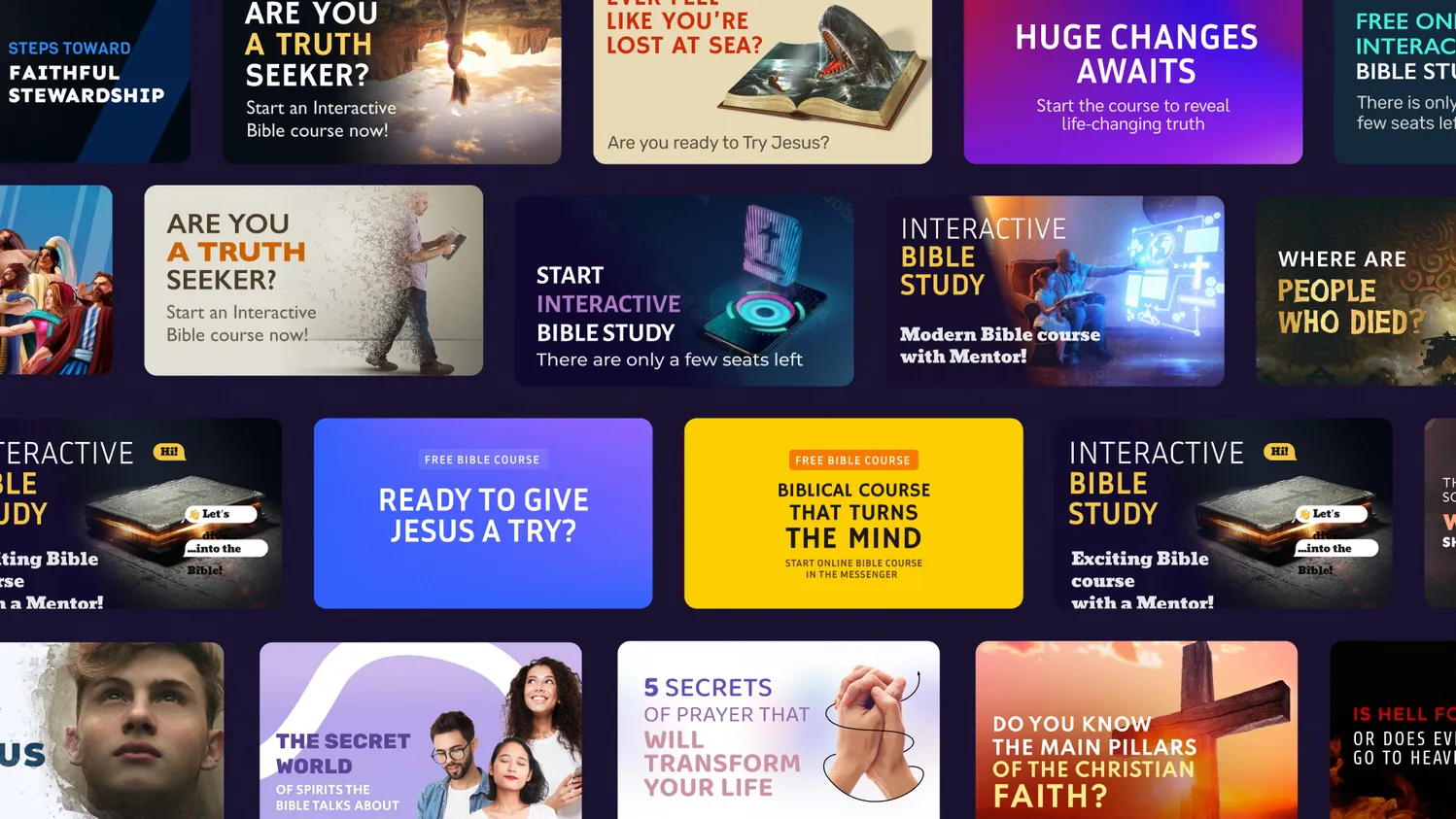
Around the platform, the campaigns that fill it. Courses built with Pavel Goia and other well-known Adventist speakers and bloggers brought audiences the school could not have reached on its own, and the largest launches put more than thirty thousand people into the platform at once, which is a different engineering problem from a course with two hundred.
What the platform cannot do is run the mentorship, and the shape of that differs by country. Some fields run evangelism centres with teams answering around the clock; others lean on individual mentors who are ordinary church members. Both work. Both are administrative work that no amount of software removes, and planning for which one a field will actually staff belongs at the start of a project rather than after launch.
04What changed
More than half a million people have been brought into courses on the platform, the largest single launch carried over thirty thousand at once, and conversion has reached fifteen per cent on the strongest courses.
Schools other teams have run on the same platform have gone further than that: one reported thirty-four per cent. The number is theirs rather than ours, and the distinction is the whole point. The platform can carry that result; what decides it is the course, the audience it was written for, and whether anybody answers the people who arrive.
05What this means for you
This project taught us to say the real number. Online learning is an industry of impressive percentages, and the temptation when a course converts at four per cent is to find a denominator that makes it nine. We decided early to report what happened, including when what happened was disappointing, and it has never once cost us a client. It has several times changed what we built next, which a flattering number would not have.
The second thing to take from it: before you commission a school, decide who is going to answer the student who stops. If the answer is nobody, the platform will not save the course, and you are better off spending the budget on the people than on the software.
FAQ
Questions about this project
Can we have a Bible school like this?
Yes, and the platform exists, so you are not paying for it to be invented. The work is your courses, your funnel and the decision about who mentors. We will say in the first call whether what you want is a straightforward school or a platform project.
What conversion should we expect?
It depends on who you bring in and who answers them, and anybody quoting you a single figure before seeing either is guessing. On this platform the strongest courses have reached fifteen per cent, and plenty have done much less. We will tell you which end you are at as soon as the first cohort has run.
Who looks after the students?
Your people, and it is the part to plan first. Some fields staff an evangelism centre with a team answering around the clock; others match each student with a church member. Both work. What does not work is assuming the platform will do it.
Who writes and publishes the courses?
You do. The editor was built so that publishing a lesson is an editorial act, not a development ticket, and a school that cannot publish without us is a school we built wrong.
Have a project like this?
Tell us where you are today. The first call is a conversation, not a pitch, and the written proposal costs you nothing.