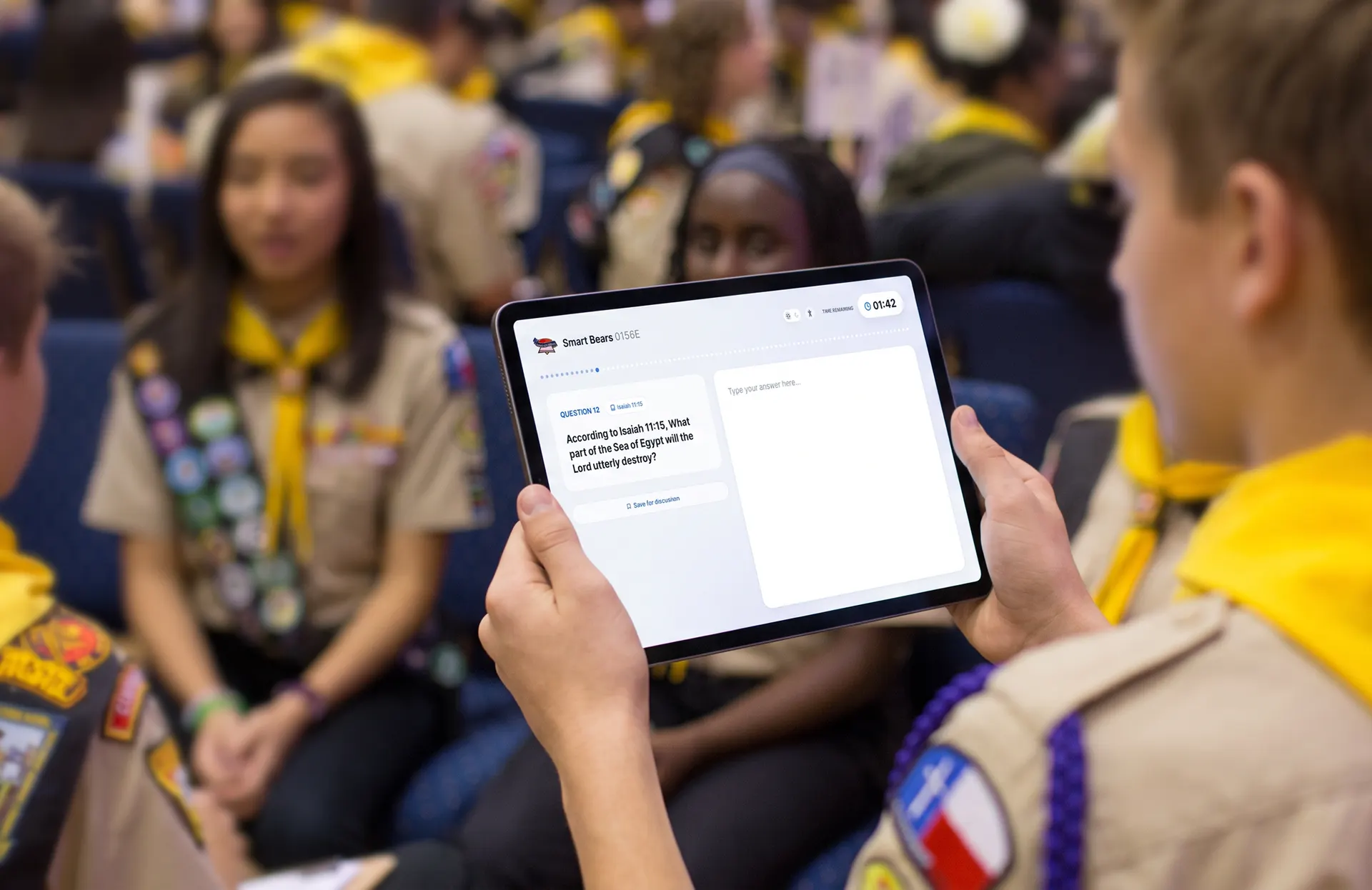
Work South Pacific Division Youth Department Discovery
One plan for a Bible event run across 44 countries, agreed before anything was built
The Youth Department of the South Pacific Division asked what it would take to run Pathfinder Bible Experience on one platform. We answered in a discovery phase rather than in code: the screens, the scope and the documentation a build can start from, reconciled across leaders in 44 countries and designed for the moment the internet drops.
01What they came with
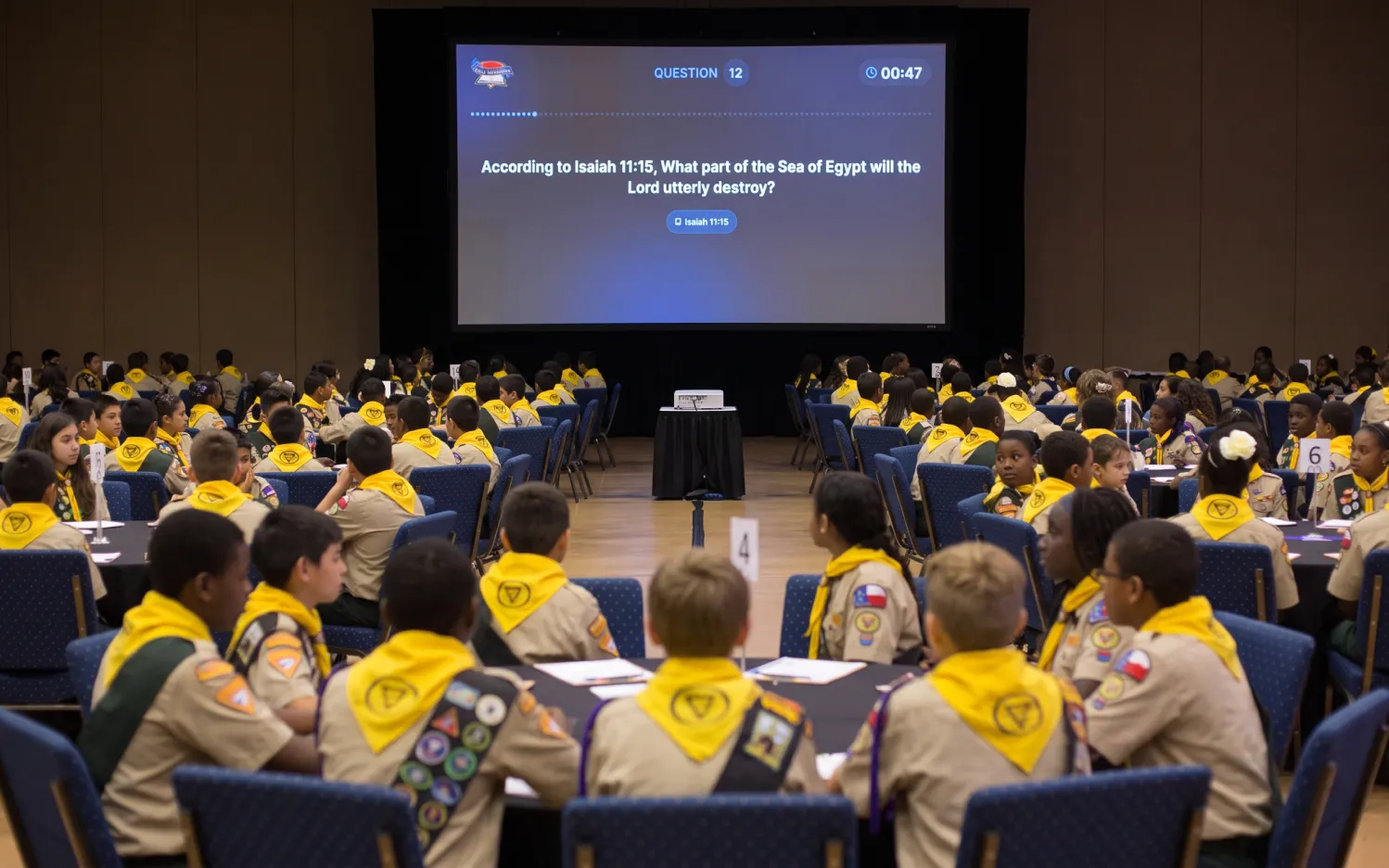
Pathfinder Bible Experience is a year of work for the children in it. A team studies a book of the Bible until they know it, and is then tested on it, level after level, from the club to the area to the conference and beyond.
Around that sits an administration nobody signed up for: registration and forms, volunteers to recruit and brief, judges to assign, answers to score consistently, regions in different places running their own rounds on the same day.
The South Pacific Division’s Youth Department asked what it would take to run all of that on one platform. Not “build this”, but “should this exist, what exactly is it, and what does it cost”.
02What was getting in the way
The hardest part was not technical. The software is a collaboration between 44 countries across Europe, Oceania and North America, and every cohort of leaders arrived with its own way of running the event and its own list of what the platform must do. A design that satisfies one of them is not a design.
The internet was the other one. PBE happens in halls, camps and country churches, and connectivity there fails at the moment it matters most. A platform that assumes a connection is a platform that will fail at an event, in front of children who have prepared for a year.
And the question itself was not a build request. Answering “should this exist and what is it” with code is the expensive way to answer it; a proposal written from the outside would have been a guess with a number attached.
03What we built
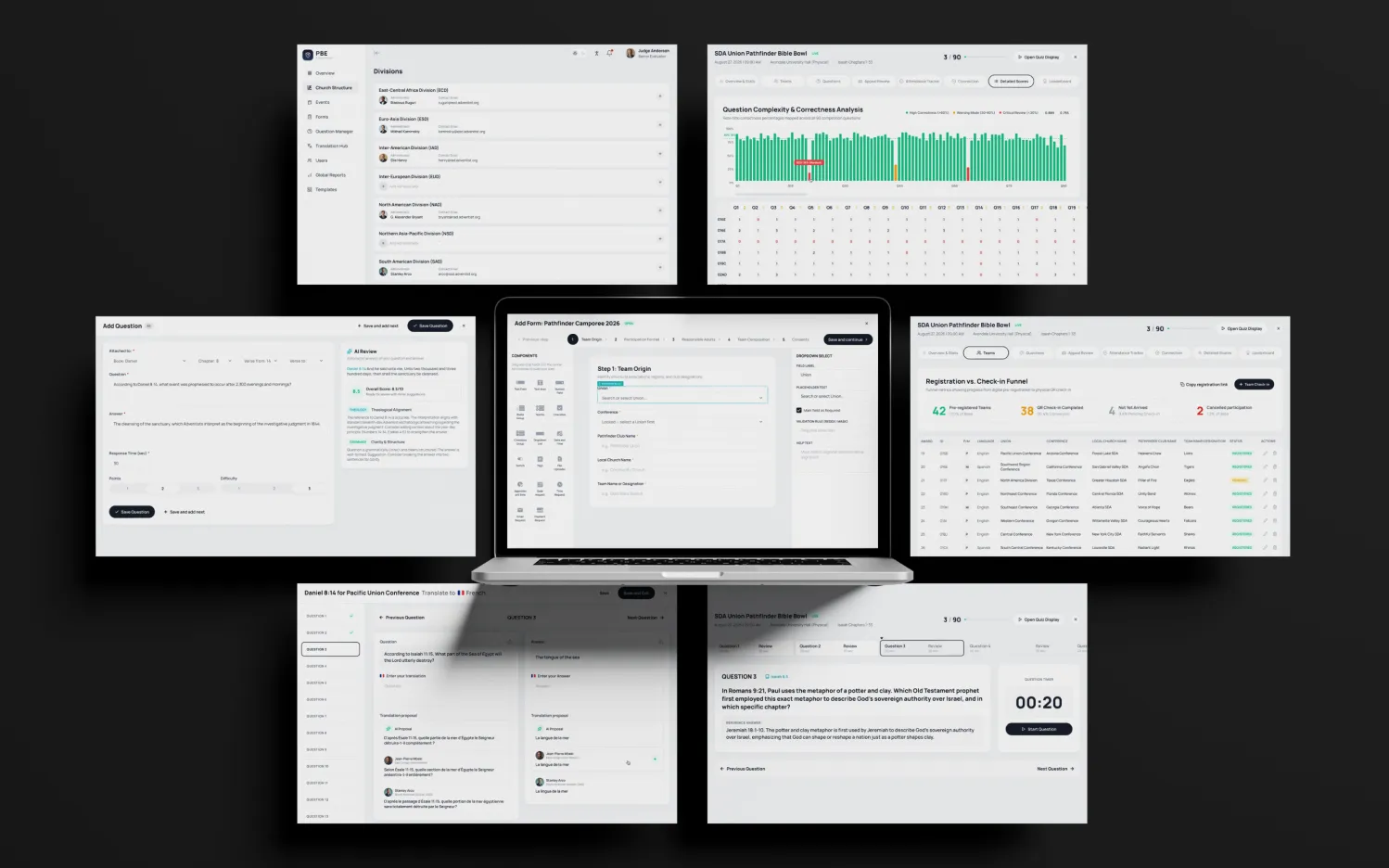
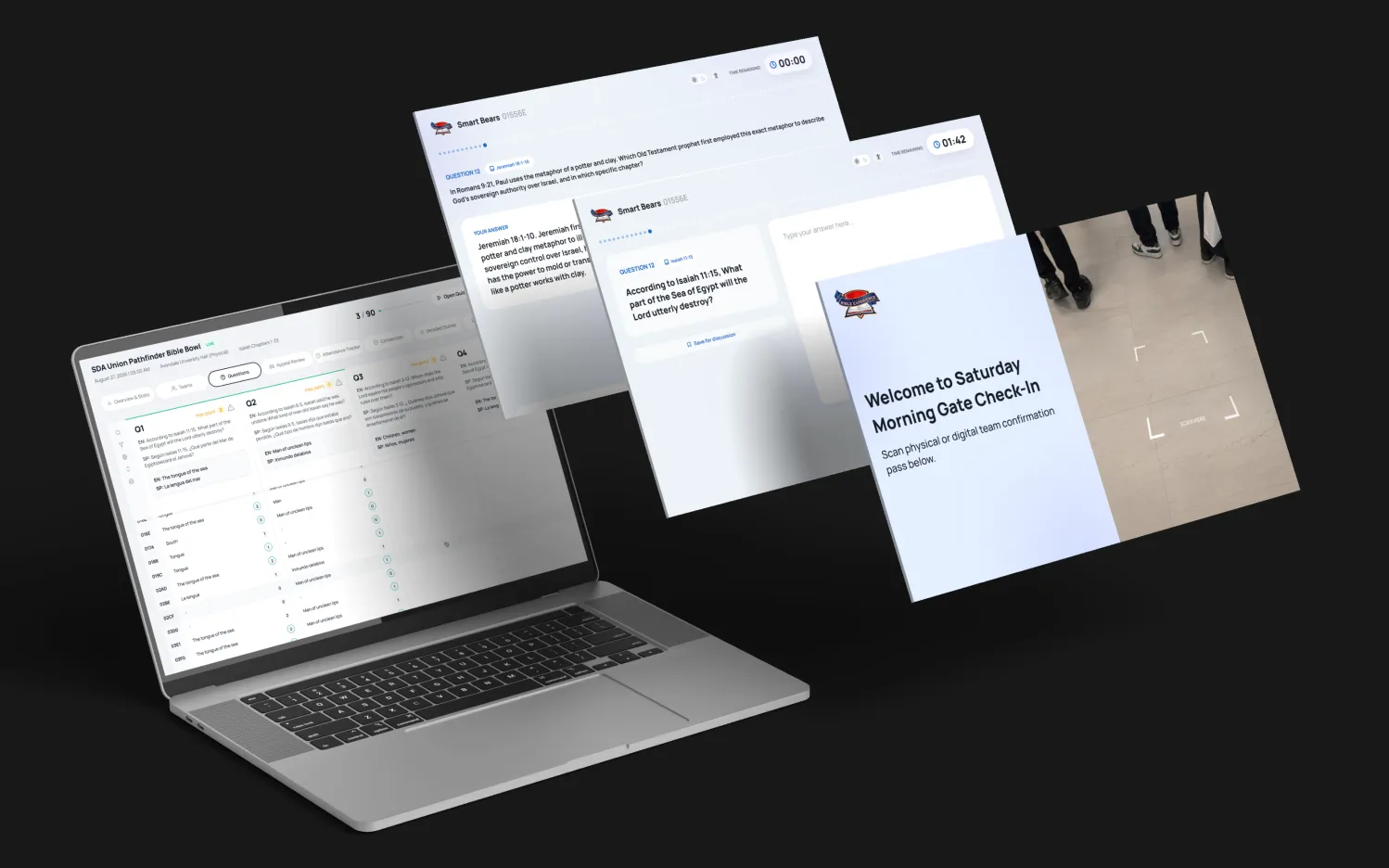
A discovery phase: the flows, the screens, the scope and the technical documentation a build can start from, costed, so the division can decide with numbers rather than with a feeling.
The work of reconciliation, meeting by meeting, until the varied expectations of 44 countries became one plan that almost everybody could recognise as theirs. That is most of what a discovery on a project like this actually is.
Three ways of running the same event: fully online, with monitoring of who is actually connected; across regions, each running its own round; and fully offline on a local machine at the venue, so a lost connection is an inconvenience rather than the end of the day.
The judging side designed around the volunteers who do it: assigning judges, running the challenges, and AI checking of written answers as a way to keep scoring consistent and give a volunteer less to carry, with the human judgment kept where it belongs. Plus the unglamorous half that decides whether an event runs at all: registration, the forms each region needs, and getting volunteers in and briefed.
04What changed
The discovery is delivered and the build is under discussion. Nothing is running yet, and a case study that implied otherwise would be the wrong kind of case study.
What the discovery changed is the question. It moved from “could someone build this” to “this is what it is, this is what it costs, and this is what 44 countries agreed it has to do” — which is a question a division can actually answer.
“The software we are working on is a collaboration between 44 different countries from Europe, Oceania & North America. It’s complex and Alex has worked easily with each cohort of leaders with their varied expectations bringing together a plan that encapsulates all the wants with very little compromise.”
05What this means for you
The decisions that are expensive to change are the ones made first. Offline is the clearest example on this project: designed in, it shapes the architecture; added six months later, it is a rewrite. A discovery is where that decision costs a conversation instead of a quarter.
The other one is agreement. When a project belongs to many fields at once, the plan everybody can live with is the deliverable, and it is not something a development team can produce later while also writing code.
So if you are weighing a platform and cannot yet say what it must do when the network fails, or what the whole thing costs, that is the work to buy first. It is the cheapest part of any project and the only part that can save the rest.
FAQ
Questions about this project
Is this platform available?
Not yet. What exists today is the discovery: the design, the scope and the documentation. The build is under discussion. If you run PBE in another division or union and would want this, say so — more than one field wanting it is the argument that gets it built.
What does a discovery phase actually give us?
A decision you can take to a committee: what the thing is, what it does, what it looks like, what it costs and what was decided about the hard parts. If you then build it with us, the discovery is the brief. If you build it with somebody else, it still is.
How do you get 44 countries to agree on one design?
Slowly, in meetings, and by writing down what each cohort of leaders actually needs rather than what they first ask for. Most of the apparent disagreement turns out to be the same requirement described in different words. The rest is a decision somebody has to take, and taking it in discovery costs a conversation.
Can it really run with no internet?
That was the requirement the design is shaped around rather than a feature added to it: an event can run on a machine in the room and reconcile afterwards. It is the kind of thing that has to be decided before anything is built, which is exactly why it was.
Where does the AI stop and the judge start?
The AI is there to make scoring consistent and to take load off volunteers who are doing this on a Sabbath, not to decide who wins. A result that a child has worked a year for is signed off by a person.
Have a project like this?
Tell us where you are today. The first call is a conversation, not a pitch, and the written proposal costs you nothing.